Who Are You Without a Drink? Taking Off the Mask for Good
Oct 30, 2026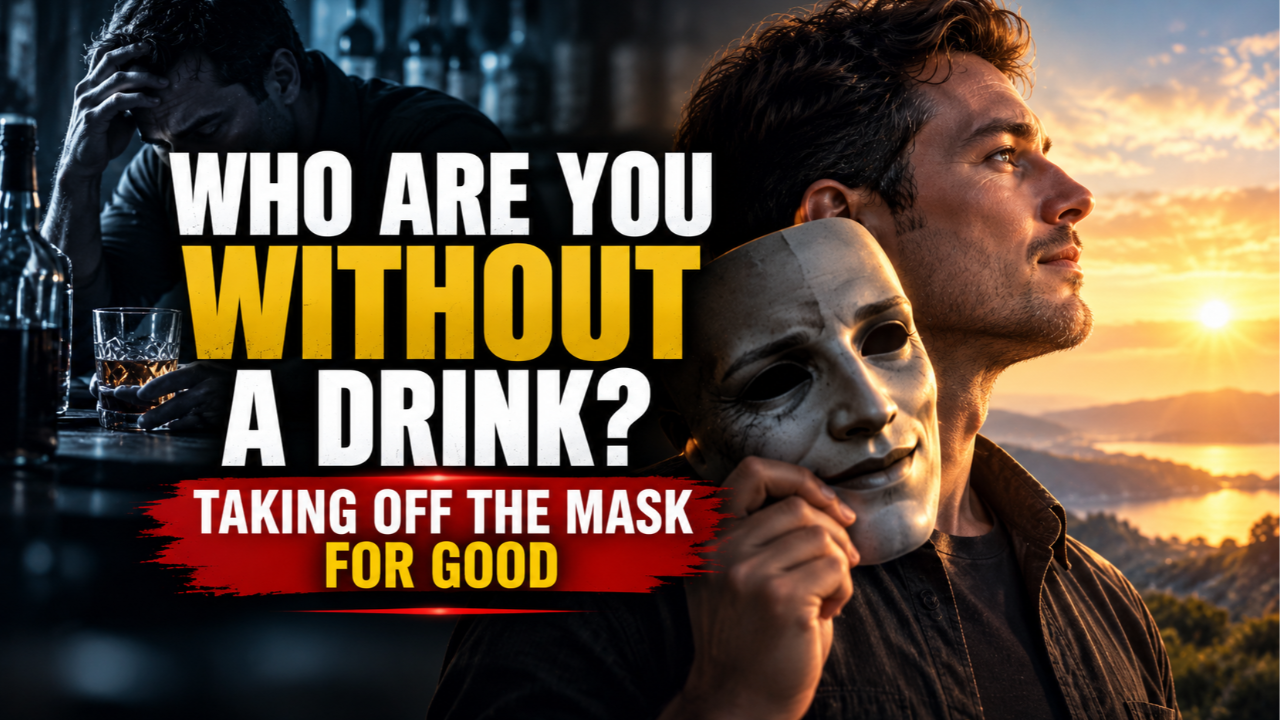
Who Are You Without a Drink? Taking Off the Mask for Good
Halloween is creeping closer, and the shops are full of masks, capes and plastic fangs. For one night a year, people happily pretend to be someone else. Here's the uncomfortable twist. Plenty of drinkers wear a mask every single weekend without realising it. Alcohol becomes the costume that makes you funny, confident and relaxed. So when you think about quitting, a scary question pops up. Who am I without it?
That question stops more people from quitting than any craving ever could. You might worry you'll become dull at parties, drift away from your friends or turn into the boring one who heads home at ten. Those fears feel real, but they rest on a shaky idea. They assume the drink created your personality. It didn't. It borrowed the credit for qualities you already had and then sent you the bill.
Researchers who study recovery have a name for this shift. They call it a social identity transition, and it turns out to be one of the strongest drivers of lasting change. In plain English, people who stay sober tend to stop seeing themselves as someone who's giving something up. They start seeing themselves as someone who's gained something precious. So let's look at how that change actually happens in real life.

Why Alcohol Feels Like Part of Who You Are
Think about how often a drink sits at the centre of your story. The pint with colleagues after work. The bottle of red shared on a Friday night. The fizz at weddings, birthdays and christenings. Over the years, alcohol threads itself into almost every ritual you have. No wonder it feels like part of your identity. It's turned up in every photograph, quietly taking a bow for all the good times.
Psychologist Genevieve Dingle and her colleagues found that drinking identities are often built through groups. Think of the friends you drink with, the pub where everyone knows your order and the family that toasts every occasion. Belonging feels wonderful, and alcohol hitches a ride on that warm feeling. Your brain links the two, so giving up the drink can feel a lot like giving up the people and the belonging that came with it.
Here's the bit nobody mentions. The confidence you feel after two glasses is your own confidence with the brakes taken off. The humour is your humour. The warmth is your warmth. Alcohol doesn't add any of those qualities. It quietens your inner critic for an hour, then charges you interest in the form of anxiety, broken sleep and a foggy tomorrow. You've been paying rent on something you already owned.
What Happens to Your Identity When You Quit
The first few weeks can feel strange, a bit like walking around without your phone. You reach for something that isn't there. Social events may feel awkward at first, and you might wonder whether people find you less interesting. That wobble is completely normal. It's the gap between the old story and the new one, and it doesn't last anywhere near as long as most people fear it will.
A model developed by David Best and his colleagues, called the social identity model of recovery, pulls together years of research showing that people who connect with groups that value sobriety tend to do far better over time. Another study by Buckingham, Frings and Albery found that people with a stronger recovery identity felt more confident about staying on track than those who still saw themselves mainly as drinkers.
That's good news, because it means you don't need superhuman discipline. You need a new story about who you are. When you see yourself as someone who simply doesn't drink, saying no at a party stops feeling like a sacrifice. It feels like being yourself. Nobody has to grit their teeth to avoid something that holds no appeal, and that's exactly where real freedom lives. It's a lighter way to live.

How to Build a Sober Identity You Love
Start by noticing the qualities you credited to alcohol, then claim them back. Write down three moments when you felt funny, kind or brave without a drink in your hand. You'll find more than you expect. Next, add one new interest to your week, whether that's a running club, a pottery class or a Saturday morning walk. New activities create new stories, and new stories gradually create a new you.
Change your language too. Swap "I can't drink" for "I don't drink". It sounds like a tiny tweak, yet the first phrase makes you a prisoner and the second puts you firmly in charge. If you're drawn to the deeper personal development side of this journey, the resources at CraigBeck.com are a lovely place to keep exploring the person you're becoming, one honest step at a time.
Ready to Take Off the Mask?
This Halloween, let everyone else play dress up. You've got a far more interesting project on the go, which is finding out who you are when nothing is pulling the strings. The person underneath is calmer, sharper and a lot more fun than the version alcohol sold you. They've been waiting patiently in the wings for years, and now it's finally their turn to step out into the light.
If you're ready to make that change for good, you don't have to figure it out alone. Get started with the full Stop Drinking Expert course today and discover how so many people have quit without relying on willpower, misery or the feeling that they're missing out. Prefer to start with a good read? Grab the book on Amazon and begin your new chapter tonight.
References
- Best, D., Beckwith, M., Haslam, C., Haslam, S. A., Jetten, J., Mawson, E., & Lubman, D. I. (2016). Overcoming alcohol and other drug addiction as a process of social identity transition: the social identity model of recovery (SIMOR). Addiction Research & Theory, 24(2), 111–123. https://doi.org/10.3109/16066359.2015.1075980
- Buckingham, S. A., Frings, D., & Albery, I. P. (2013). Group membership and social identity in addiction recovery. Psychology of Addictive Behaviors, 27(4), 1132–1140. https://doi.org/10.1037/a0032480
- Dingle, G. A., Cruwys, T., & Frings, D. (2015). Social identities as pathways into and out of addiction. Frontiers in Psychology, 6, 1795. https://doi.org/10.3389/fpsyg.2015.01795
⚠️ Medical Disclaimer: This article is for educational purposes only and not a substitute for professional medical advice. Alcohol withdrawal can be dangerous. If you have been drinking heavily, consult a healthcare provider before stopping. If you're experiencing a medical emergency, call emergency services immediately.
Written By