
Why Your Gut Hates Alcohol (And How Fast It Heals When You Quit)
Oct 21, 2026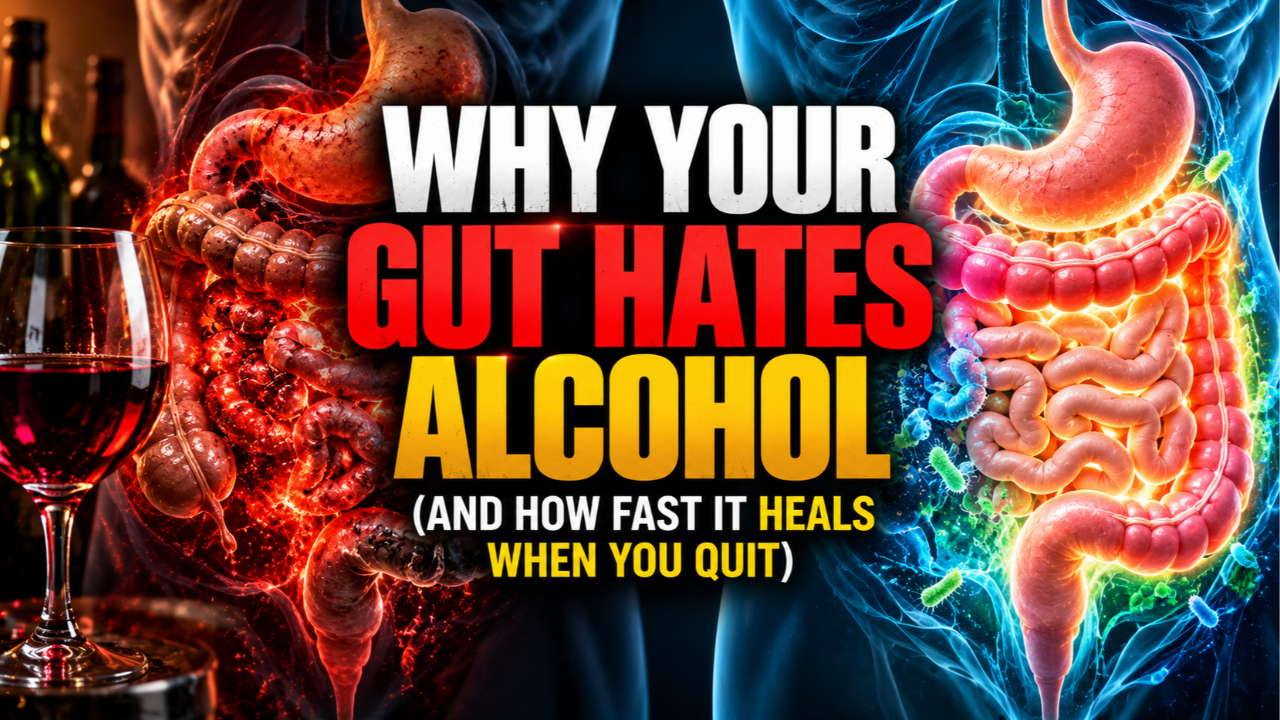
Why Your Gut Hates Alcohol (And How Fast It Heals When You Quit)
Today is World Food Day, and everyone's talking about what goes on your plate. Far fewer people talk about what sits in the glass beside it. Yet your gut doesn't care whether something arrived with a knife and fork or a corkscrew. Every drink you pour lands in the same place as your dinner, and it gets straight to work on the trillions of tiny bacteria that keep you healthy, calm and comfortable.
If you drink most nights, you've probably noticed the signs without connecting the dots. Bloating that makes your jeans feel a size smaller. Heartburn that wakes you at three in the morning. A stomach that grumbles after the most innocent meals. Many drinkers blame bread, dairy or stress. Those can play a part, of course, but the nightly glass of wine often deserves a far closer look than it ever gets.

Your digestive tract is home to a vast community of microbes, often called the gut microbiome. When it's balanced, it helps you digest food, trains your immune system and even steadies your mood. A review in Alcohol Research: Current Reviews found that alcohol pushes this community out of balance, a state scientists call dysbiosis. The friendly bacteria lose ground, while the troublemakers move in, put their feet up and start throwing parties of their own.
What alcohol really does to your gut
The damage doesn't stop with the wrong bacteria moving in. Your intestinal lining is meant to work like a fine sieve, letting nutrients through while keeping bacterial toxins out. Research published in the same journal explains that regular drinking loosens this barrier, a problem often nicknamed leaky gut. Toxins then slip into your bloodstream and spark inflammation that travels far beyond your belly, reaching your liver, your joints and even your brain.
That last part surprises most people. A study in the Proceedings of the National Academy of Sciences looked at people being treated for alcohol dependence. Those with the leakiest guts showed higher levels of depression, anxiety and craving, even after three weeks without a drink. In other words, an unhappy gut may help keep the cravings alive. Your belly and your brain chat constantly all day long, and alcohol scrambles the line between them.
This is why so many people feel trapped. You drink to take the edge off a low mood, the alcohol irritates your gut, the inflamed gut nudges your mood lower, and tomorrow evening the bottle looks even more tempting. It's a merry go round nobody chose to ride. The good news is that you can step off it whenever you decide, and your body is remarkably quick to reward you when you do.
How fast your gut bounces back

Here's where the story turns hopeful. In that same study, the people with the leakiest guts saw their gut permeability fall back to normal levels after only 19 days of abstinence. Less than three weeks! Your intestinal lining renews itself constantly, so once you stop pouring fuel on the fire, repair begins almost straight away. Many people notice flatter tummies, calmer digestion and fewer midnight trips to the medicine cabinet within a fortnight.
You can help the healing along, too. Feed your friendly bacteria with fibre rich foods such as oats, beans, lentils and plenty of colorful vegetables. Fermented foods like natural yogurt, kefir and sauerkraut add fresh recruits to the team. Drink water generously and protect your sleep. None of this is complicated or expensive. It's simply what happens when you stop fighting your own biology and finally start working with it instead.
Of course, knowing alcohol harms your gut rarely makes quitting easy on its own. The real work happens in your mind, where years of conditioning have convinced you that drinking is a reward. That belief can be dismantled, and it's far less painful than you fear. Join the free quit drinking webinar and grab your free ebook at Stop Drinking Expert today. Your gut, your mood and your future self will thank you.
References
- Bishehsari, F., Magno, E., Swanson, G., Desai, V., Voigt, R. M., Forsyth, C. B. and Keshavarzian, A. (2017). Alcohol and gut derived inflammation. Alcohol Research: Current Reviews, 38(2), 163. Read the review
- Engen, P. A., Green, S. J., Voigt, R. M., Forsyth, C. B. and Keshavarzian, A. (2015). The gastrointestinal microbiome: alcohol effects on the composition of intestinal microbiota. Alcohol Research: Current Reviews, 37(2), 223. Read the review
- Leclercq, S., Matamoros, S., Cani, P. D., Neyrinck, A. M., Jamar, F., Stärkel, P. and colleagues (2014). Intestinal permeability, gut bacterial dysbiosis, and behavioral markers of alcohol dependence severity. Proceedings of the National Academy of Sciences, 111(42), E4485. Read the study
⚠️ Medical Disclaimer: This article is for educational purposes only and not a substitute for professional medical advice. Alcohol withdrawal can be dangerous. If you have been drinking heavily, consult a healthcare provider before stopping. If you're experiencing a medical emergency, call emergency services immediately.
Written By