Slipped Up? Why One Bad Night Doesn't Erase Your Progress
Oct 30, 2026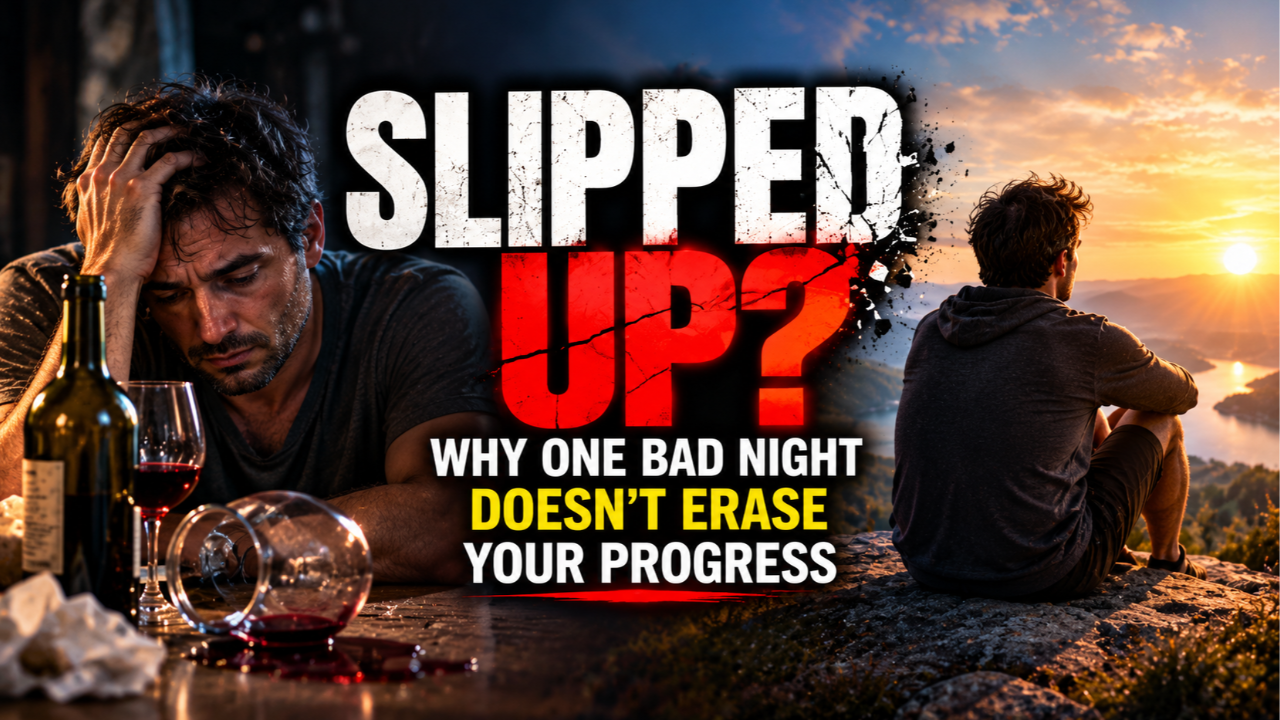
Slipped Up? Why One Bad Night Doesn't Erase Your Progress
We're into the final stretch of Sober October, and this is the week a lot of people quietly crack. A birthday, a rotten day at work or a friend saying go on, it's only one, and suddenly there's a glass in your hand. The next morning arrives with a familiar sinking feeling. You tell yourself you've blown it, that you're weak and that you may as well give up. Stop right there.
A slip feels like the end of the road, but it rarely is. What you do in the next 24 hours matters far more than the drink itself. Plenty of people who are happily alcohol free today had a wobble or two along the way. The ones who made it didn't have more willpower. They simply learned to treat the slip as information rather than a verdict on their character.
So if you're reading this with a heavy head and a heavier heart, take a breath. Nothing has been erased. The days you strung together still happened, your body still benefited and your brain still learned that life without booze is possible. Let's look at why the morning after feels so brutal, what usually triggers a slip and how to get back on your feet before one night turns into one month.

Why a Slip Feels Like Total Failure
Psychologists have a name for that crushing all or nothing feeling. They call it the abstinence violation effect. Alan Marlatt, a pioneer in relapse research, noticed that people who break a rule they've set for themselves often blame their whole personality. The thinking goes something like this: I drank, so I'm hopeless, so there's no point trying. That chain of thoughts does far more damage than the alcohol ever could.
Here's the trap. When you label yourself a failure, drinking becomes the obvious way to numb the shame, and the shame then fuels the next drink. Witkiewitz and Marlatt describe relapse as a dynamic process rather than a single event. In plain English, that means a lapse is a moment you can step out of, not a cliff you've already fallen off. You get to decide which way the story goes from here.
It helps to remember how common this is. A long term study by Rudolf Moos and Bernice Moos followed people who'd quit drinking and found that many experienced setbacks on the road to lasting change. That isn't an excuse to keep drinking. It's proof that a stumble is part of the terrain for lots of people, and that it says nothing final about who you are or where you'll end up.
The Real Reason You Picked Up That Drink
Most slips don't come out of nowhere. They usually follow a pattern: tired, hungry, stressed or lonely, combined with a situation where alcohol is everywhere. Your brain spent years linking certain feelings and places with a drink, so when those buttons get pressed, the old program fires up. It isn't a moral failing. It's a habit loop doing exactly what it was trained to do, and loops can be retrained.

The most useful thing you can do today is play detective. Grab a notebook and write down what happened in the hours before you drank. Who were you with? How were you feeling? What story did you tell yourself? You'll often spot that the drink was a promise of relief that never delivered. Seeing that clearly, in black and white, takes a lot of the magic out of the next temptation.
Also be honest about whether you were relying on gritted teeth. If quitting felt like a constant battle against something you secretly still wanted, a slip was always waiting in the wings. Lasting freedom comes from changing how you see alcohol, so you stop feeling deprived. When the desire goes, there's nothing left to resist, and that's a far more comfortable place to live.
How to Get Back on Track Today
First, put down the stick you're beating yourself with. Shame keeps people drinking, whereas kindness gets them moving again. Talk to yourself the way you'd talk to a friend who'd tripped on the pavement. Then drink plenty of water, eat something decent and get outside for a walk. Your body will thank you, and a clear head makes the next good decision so much easier.
Next, make a plan for the trigger you uncovered. If it was a work night out, decide what you'll order and when you'll leave before you even arrive. If it was a lonely Sunday, line up something you'll look forward to. Research reviewed by Hendershot and colleagues shows that spotting high risk situations and preparing coping strategies in advance genuinely lowers the chance of another lapse. A little forward thinking goes a long way.
Finally, look at the bigger picture. Party season is round the corner, and the pressure will only grow. If you want to walk into December feeling calm rather than white knuckled, now is the perfect moment to deal with the root of the problem instead of patching the symptoms. Your slip doesn't disqualify you. If anything, it's shown you exactly where the work needs to happen.
If you're ready to stop starting over, get started with the full Stop Drinking Expert course and learn how to remove the desire to drink instead of fighting it every day. Prefer to begin with a good read tonight? Grab the book on Amazon and discover why so many people finally find quitting easy once they see alcohol for what it really is.
References
- Hendershot, C. S., Witkiewitz, K., George, W. H., & Marlatt, G. A. (2011). Relapse prevention for addictive behaviors. Substance Abuse Treatment, Prevention, and Policy, 6, 17. https://doi.org/10.1186/1747-597X-6-17
- Moos, R. H., & Moos, B. S. (2006). Rates and predictors of relapse after natural and treated remission from alcohol use disorders. Addiction, 101(2), 212–222. https://doi.org/10.1111/j.1360-0443.2006.01310.x
- Witkiewitz, K., & Marlatt, G. A. (2004). Relapse prevention for alcohol and drug problems: That was Zen, this is Tao. American Psychologist, 59(4), 224–235. https://doi.org/10.1037/0003-066X.59.4.224
⚠️ Medical Disclaimer: This article is for educational purposes only and not a substitute for professional medical advice. Alcohol withdrawal can be dangerous. If you have been drinking heavily, consult a healthcare provider before stopping. If you're experiencing a medical emergency, call emergency services immediately.
Written By