The Alcohol Lie That’s Destroying Your Life (And You Don’t Even Know It)
Jan 04, 2026Why Alcohol Is The Problem Not A Solution
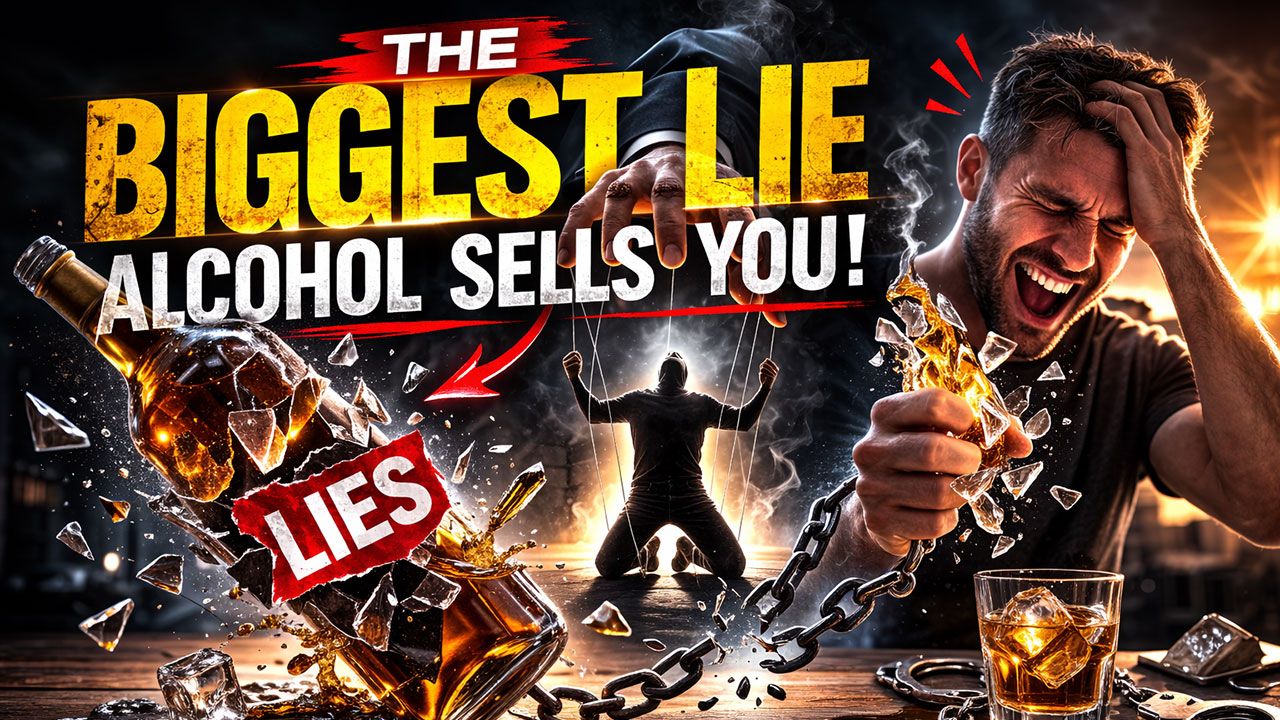
You've had a rough day. Your boss criticised your work. Your partner snapped at you over nothing. The kids wouldn't stop screaming. So you pour yourself a drink. The glass touches your lips and within minutes, the tension melts away. Problem solved, right? Wrong. Dead wrong. Because that drink didn't solve anything. It simply postponed your problems and added a few more to the pile.
Most people who drink regularly believe alcohol provides relief from stress, anxiety or emotional pain. They think it's a tool for managing life's difficulties. But research shows that alcohol doesn't eliminate problems; it compounds them. According to data from the National Institute on Alcohol Abuse and Alcoholism, over 29 million Americans struggle with alcohol use disorder, yet fewer than 10% seek treatment [web:38]. Why? Because most don't recognise that the supposed solution has become their biggest problem.
When you use alcohol to cope with difficult emotions, you're teaching your brain a dangerous lesson. You're reinforcing the idea that you can't handle life's challenges without chemical assistance. Each time you reach for a bottle instead of dealing with the underlying issue, you weaken your natural resilience. You become dependent not because you're weak, but because you've trained yourself to believe the lie that alcohol helps.
The Illusion of Relief
Alcohol creates a convincing illusion. That warm sensation spreading through your body feels like relaxation. The softening of sharp emotions seems like healing. But what's actually happening? Your central nervous system is being suppressed. You're numbing yourself, not fixing anything. The work deadline is still there. The relationship conflict remains unresolved. The financial worry hasn't disappeared. You've temporarily disabled your ability to feel the discomfort, nothing more.
Studies demonstrate that alcohol actually worsens the very conditions people drink to escape. Depression symptoms intensify with regular drinking [web:41]. Anxiety rebounds harder once the depressant effects wear off. Sleep quality deteriorates despite alcohol making you feel drowsy. Your brain chemistry shifts in ways that make natural happiness more difficult to achieve. Every single problem you tried to drown becomes more troublesome because now you're dealing with them whilst also managing the cognitive and physical effects of alcohol consumption.
Think about this logically. If alcohol genuinely solved problems, wouldn't heavy drinkers be the happiest, most successful people in society? Instead, the opposite proves true. Long-term alcohol misuse correlates with liver disease, cardiovascular problems, various cancers, memory loss, nerve damage and worsening mental health conditions [web:42]. Nearly 180,000 Americans die annually from alcohol-related causes [web:38]. That's not the profile of something that makes life better.
The Chemical Trap
Your brain operates through delicate chemical balances. When alcohol enters your system, it floods your brain with artificial dopamine and suppresses stress hormones temporarily. This feels fantastic in the moment. But your brain isn't stupid. It adapts. It reduces its own production of feel-good chemicals because you're supplying them externally. Over time, you need alcohol to feel normal because your brain has downregulated its natural mechanisms.
This isn't weakness or moral failing. It's basic neurobiology. The more frequently you use alcohol to manage emotions, the less capable you become of managing them naturally. Your tolerance increases. What used to relax you no longer works at the same dose. So you drink more. The cycle intensifies. Before long, you're not drinking to feel good anymore; you're drinking to avoid feeling terrible. The solution became the problem.
Breaking free requires understanding this fundamental truth: alcohol never was a solution. It was always a problem disguised as relief. When you stop viewing it as something helpful and start seeing it for what it truly is—a toxic depressant that steals your natural coping abilities—everything changes. You stop fighting yourself. You stop believing you're giving something up. Instead, you recognise you're escaping from a trap.
Reclaiming Your Natural State
Imagine waking up without the fog. Picture handling stress with clarity instead of numbing it with poison. Consider the money saved, the relationships restored, the health regained. None of this is fantasy. Thousands of people discover these realities when they break free from alcohol's grip. They don't white-knuckle their way through life wishing they could drink. They feel liberated, wondering why they ever thought alcohol helped.
Your brain possesses remarkable healing abilities. When you stop introducing a depressant drug into your system, your natural chemistry gradually restores itself. Your sleep improves. Your mood stabilizes. Your anxiety decreases. Problems that seemed insurmountable become manageable again because you're facing them with your full cognitive function intact. You rediscover strengths you forgot you had.
The cultural narrative tells us alcohol is sophisticated, adult, necessary for socialising or relaxing. But this narrative serves the alcohol industry, not you. Question everything you've been told about drinking. Why would a multi-billion dollar industry want you to believe their product is essential for enjoying life? They wouldn't make profits if everyone realised the truth: life gets better when you stop poisoning yourself.
The Path Forward
If you've been using alcohol to cope, you're not alone. Over 55% of people with alcohol problems don't recognise they have a problem [web:37]. That's how effective the illusion is. But awareness creates change. Once you see alcohol for what it is—a problem masquerading as a solution—you can choose differently. You can seek support, learn healthy coping strategies, and rebuild your life without chemical crutches.
Getting help isn't admitting defeat. It's claiming victory over a substance that's been lying to you. Professional support, whether through therapy, coaching or specialised programs, gives you tools that actually work. Unlike alcohol, these tools strengthen you rather than weaken you. They address root causes instead of symptoms. They build resilience rather than dependency. If you're ready to explore what life looks like without alcohol clouding your judgement, resources exist to guide you through that transformation.
The Stop Drinking Expert program offers comprehensive support for anyone questioning their relationship with alcohol. It doesn't require you to label yourself or attend endless meetings. It simply helps you see the truth about alcohol and equips you with everything you need to break free. For deeper insights into human behaviour and the patterns that keep us stuck, subscribe to The Craig Beck Show (Humans Decoded) on YouTube, where we explore the psychology behind our choices and how to create lasting change.
Your Decision Point
You're standing at a crossroad right now. One path continues the cycle of using alcohol to manage problems whilst creating new ones. The other path involves facing reality with courage and discovering you're far stronger than you realised. Which direction serves your future better? Which version of yourself do you want to become? The person who needs a drink to cope, or the person who handles life's challenges with confidence and clarity?
Alcohol isn't your friend. It never was. Friends don't damage your health, drain your bank account, cause relationship problems, impair your judgement or steal your joy. Alcohol does all these things whilst pretending to help. It's time to end the relationship with this toxic substance and reclaim your power. Your problems won't disappear overnight, but you'll finally have the mental and emotional resources to address them effectively. That's not a solution in a bottle; that's real, lasting change.
Join the growing community of people who've discovered that life without alcohol isn't deprivation—it's liberation. Subscribe to The Craig Beck Show for weekly insights into human psychology, behaviour change and personal development. Connect with the free Inner Circle at CraigBeck.com to access additional resources and support. Your journey to freedom starts with a single decision: to stop believing alcohol's lies and start trusting your own strength.
References and Further Reading
- National Institute on Alcohol Abuse and Alcoholism. (2022). Alcohol Use Disorder Statistics. Available at: https://www.niaaa.nih.gov
- Probst, C., et al. (2015). Alcohol use disorder severity and reported reasons not to seek treatment. PMC4534056.
- Jed Foundation. Understanding the Mental Health and Drinking Connection. Available at: https://jedfoundation.org
- American Psychological Association. (2023). Tackling the hidden epidemic of risky alcohol use.
- Northwestern Medicine. (2021). How Alcohol Impacts the Brain.
⚠️ Medical Disclaimer: This article is for educational purposes only and not a substitute for professional medical advice. Alcohol withdrawal can be dangerous. If you have been drinking heavily, consult a healthcare provider before stopping. If you're experiencing a medical emergency, call emergency services immediately.
Written By